Weight Loss · Medical
Sponsored Feature · 7 min read
The Weight Loss Approach Women Are Finally Talking About — And What to Know Before You Start
A new class of medically supervised treatment is producing
results that diets and programs couldn't deliver. Here's what's
driving it — and the one thing most people don't check before
they sign up.
Health & Wellness Desk
·
MAY 2025
·
Sponsored Feature

For most of her adult life, Susan did everything she was told. She
counted calories. She joined programs. She lost weight, felt hopeful, and gained it back. Over and over, for nearly two decades. "At
some point," she says, "you stop blaming the diet and start blaming
yourself."
Then her doctor mentioned something she hadn't heard of. Not a supplement.
Not another program. A prescription treatment — administered once a week —
that worked in a way nothing before it had. Within three months, Susan had lost
more weight than she had in years of dieting combined.
"The thing that got me," she says, "was that I didn't feel like I was fighting
anymore."
“
"I thought the hunger was just who I was. That I was someone
who needed to be hungry all the time to maintain any kind of
weight. I didn't realize there was a reason for it — and that the
reason could be addressed."
— Member, 51 · Individual experience
Why Diets Fail Isn't a Mystery Anymore
For decades, the medical establishment treated excess weight as a behavioral
problem. Eat less. Move more. Lack of progress meant lack of effort. That
framework has been steadily dismantled by research — and the picture it
reveals is far more complicated.
When the body carries excess weight, it produces elevated levels of ghrelin —
the hormone that drives hunger — while producing lower levels of leptin, the
hormone that signals fullness. The brain's reward system simultaneously
becomes more attuned to food. The result is a biological environment that is
actively resistant to weight loss, and that intensifies under caloric restriction.
Put plainly: the more you diet, the harder your body fights back. It is not a
character flaw. It is a hormonal cascade — and no amount of discipline
overrides it. This is why the research on long-term outcomes for diet-only
approaches is so discouraging. The biology was always working against the
effort.
What changed is that medicine found a way to address the biology directly.
"We spent decades asking patients to fight their own
hormones with willpower. These treatments are the first to
address what was actually happening — and the results
reflect that."
— Perspective widely shared in obesity medicine research
What This New Class of Treatment Actually Does
For women who have spent years — or decades — managing that relentless
pull, the change can feel profound. Not dramatic. Not like a surge of energy or
suppressed appetite. Just quiet. Manageable. For the first time, the body is
working with them instead of against them.
The treatments now producing remarkable results in medical weight loss work on the system that regulates hunger, fullness, and how the brain processes the urge to eat. They mimic hormones that your body releases naturally after eating — hormones that signal satisfaction and slow digestion — but in a sustained form that lasts throughout the week.
The effect for many patients is something they describe as striking in its simplicity: the constant background noise of hunger quiets down. Meals feel satisfying. The pull toward food between meals diminishes. The brain stops treating every moment as an opportunity to eat.
The treatments now producing remarkable results in medical weight loss work on the system that regulates hunger, fullness, and how the brain processes the urge to eat. They mimic hormones that your body releases naturally after eating — hormones that signal satisfaction and slow digestion — but in a sustained form that lasts throughout the week.
The effect for many patients is something they describe as striking in its simplicity: the constant background noise of hunger quiets down. Meals feel satisfying. The pull toward food between meals diminishes. The brain stops treating every moment as an opportunity to eat.
What patients commonly describe — before and during treatment
Before
Thinking about food constantly — what
to eat next, what not to eat, managing
cravings throughout the day
During treatment
Food noise quiets significantly — meals
feel satisfying, the pull between meals
diminishes
Before
Losing weight on a diet, then regaining it
— often more than was lost — within
months
During treatment
Weight loss that continues over months,
supported by the hormonal environment
the treatment creates
Before
Feeling like the body is actively resisting
every effort — metabolism, cravings, and
energy working against progress
During treatment
The biological resistance lessens —
sustained effort produces sustained
results for the first time
Before
Managing weight-related health markers
— blood pressure, blood sugar, energy
levels — that don't improve with effort
alone
During treatment
Many patients report improvements in
overall health markers alongside weight
loss — energy, mobility, and daily
comfort
The Biology Behind Appetite and Weight
To understand why this class of treatment works differently, it helps to
understand what's been working against you. Hunger isn't simply a feeling —
it's a hormonal signal. When the body needs energy, it releases ghrelin, often
called the "hunger hormone," which triggers the urge to eat. At the same time,
leptin — the hormone that signals fullness — communicates to the brain that
you've had enough.
In people who carry excess weight, this system is frequently dysregulated. Ghrelin levels run high. Leptin signals are muted or ignored. The brain's reward circuitry becomes more attuned to food. The result is a biological environment that drives eating beyond what the body actually needs — and that worsens the more you try to restrict.
GLP-1 receptor agonists work by directly engaging this system. GLP-1 is a hormone your gut naturally produces after eating — one that signals satisfaction, slows gastric emptying, and reduces appetite. These treatments provide a sustained version of that signal, giving the brain what it needs to quiet the hunger response. For many patients, the experience is less like suppression and more like finally feeling normal around food for the first time.
And now, access to this class of treatment has opened considerably.
In people who carry excess weight, this system is frequently dysregulated. Ghrelin levels run high. Leptin signals are muted or ignored. The brain's reward circuitry becomes more attuned to food. The result is a biological environment that drives eating beyond what the body actually needs — and that worsens the more you try to restrict.
GLP-1 receptor agonists work by directly engaging this system. GLP-1 is a hormone your gut naturally produces after eating — one that signals satisfaction, slows gastric emptying, and reduces appetite. These treatments provide a sustained version of that signal, giving the brain what it needs to quiet the hunger response. For many patients, the experience is less like suppression and more like finally feeling normal around food for the first time.
And now, access to this class of treatment has opened considerably.
"I'd been told my whole life that losing weight was about discipline. These
injections didn't give me more discipline. They gave me a body that wasn't
fighting me. Once that happened, everything I'd been trying to do for years
finally started working."
— Member, 47
Individual experience · Results vary
Why Most People Are Only Finding Out About
This Now
Brand-name versions of these treatments have carried price tags that put them
out of reach for most people — over a thousand dollars per month, with limited
insurance coverage. For a while, this was a story about a remarkable medical
advance that very few could actually access.
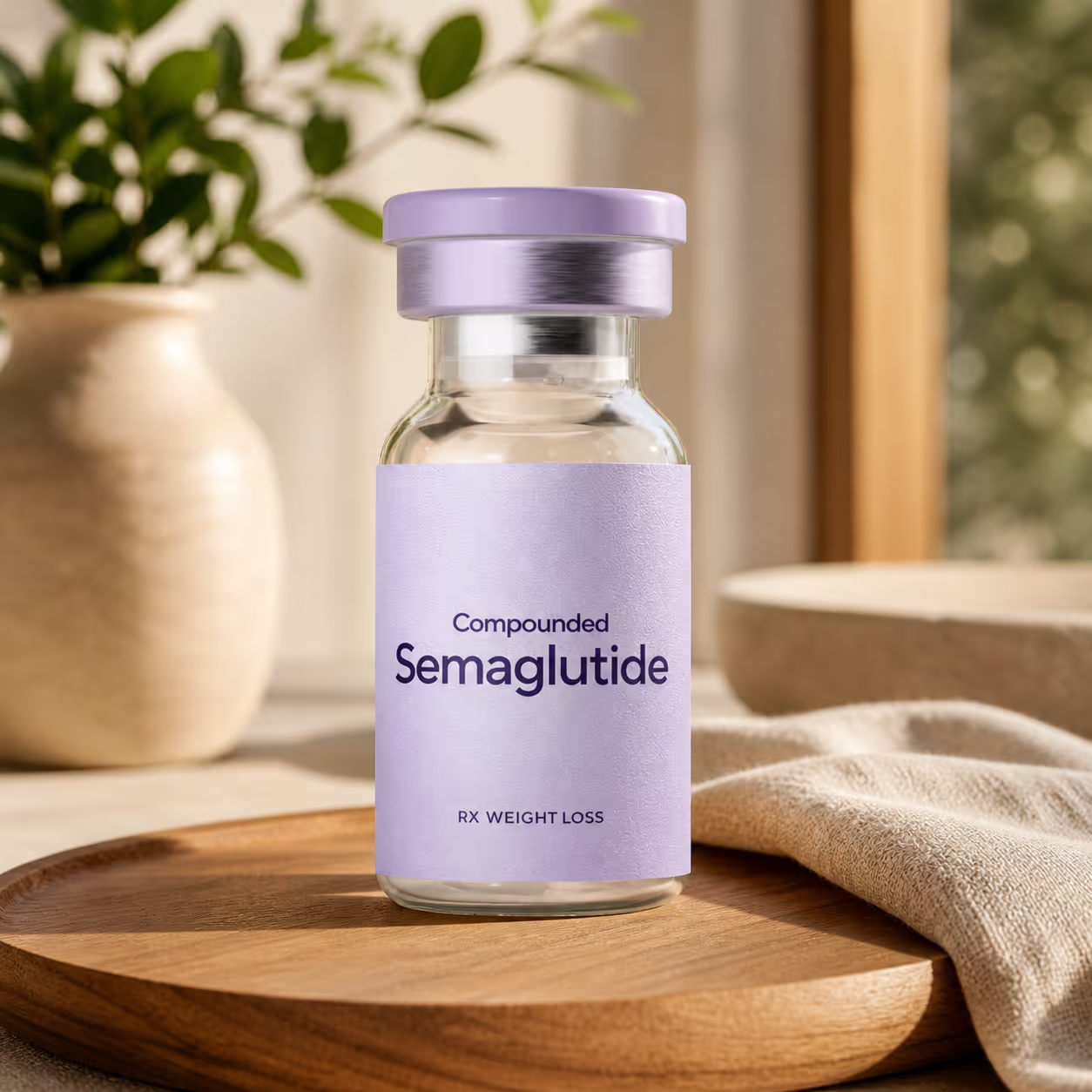
What changed is the legal availability of compounded GLP-1 treatments — prepared by licensed 503A compounding pharmacies under independent physician prescriptions. This pathway has made provider-reviewed GLP-1 care accessible at a fraction of the cost of brand-name alternatives, through online telehealth platforms, without needing insurance, and without waiting for a referral.
The result is that a treatment that was effectively available only to a narrow segment of the population is now accessible to the millions of people who could genuinely benefit from it.
But as more providers have entered this space quickly, not all of them have built their programs with the same standards. And the way they price treatment is one of the most important differences to understand before you start.
What changed is the legal availability of compounded GLP-1 treatments — prepared by licensed 503A compounding pharmacies under independent physician prescriptions. This pathway has made provider-reviewed GLP-1 care accessible at a fraction of the cost of brand-name alternatives, through online telehealth platforms, without needing insurance, and without waiting for a referral.
The result is that a treatment that was effectively available only to a narrow segment of the population is now accessible to the millions of people who could genuinely benefit from it.
But as more providers have entered this space quickly, not all of them have built their programs with the same standards. And the way they price treatment is one of the most important differences to understand before you start.
Before You Choose a Program: 7 Things to
Confirm
Most people research whether they qualify for treatment. Fewer think to
research how the pricing actually works — and that gap has led to a lot of
unpleasant surprises on second and third bills. Here is what to ask.
✓
The GLP-1 Program Pricing Checklist
1
Does the advertised price apply beyond the first month?
Some programs lead with an introductory rate that applies only to month one.
The real ongoing price — the one you'll pay for the duration of treatment — is
often different. Ask specifically: what do I pay in month two, month three, and
beyond?
!
Common in the category — always confirm
2
Does the price increase when your dose changes?
GLP-1 treatment typically involves dose escalation over time. Some programs
charge more at higher doses — meaning the price you start at isn't the price
you'll pay at a therapeutic dose. This can significantly change the real monthly
cost.
!
Dose-based pricing varies — ask before you escalate
3
Is the provider consultation included in the price?
Online GLP-1 treatment requires an independent licensed provider to review your
health information and issue a prescription. Some programs charge for this
separately — either as an upfront fee or as a recurring consultation charge.
!
Not always included — verify upfront
4
Is shipping included — and is it temperature-controlled and fast?
Injectable medications need careful handling. They should arrive quickly, in
temperature-controlled packaging, every order. Separate shipping fees are
common and add to the real monthly cost. Overnight delivery should be
standard, not an upgrade.
✓
JoinPolly — free next-day air, temperature-controlled, every order
5
Are supplies included?
Syringes and administration supplies are required for injectable treatment. Some
programs include them with every shipment. Others don't — which means
sourcing them separately, or paying an add-on cost, before you can use your
medication.
!
Easy to overlook — confirm before your first order
6
Is ongoing care support included — or is there a separate membership
fee?
Treatment doesn't end at the first prescription. Good programs provide ongoing
provider oversight, dose adjustments, and access to support over time. Some
charge separately for this — as a membership, subscription, or care coordination
fee layered on top of the medication cost.
!
Membership fees are common — check what's actually included
7
Is the total monthly price flat — at every dose, every month, with
everything included?
The clearest sign of a transparent program is a single monthly price that doesn't
change based on dose, doesn't hide fees in fine print, and covers everything you
need: medication, provider consultation, supplies, shipping, and ongoing
support. That's what all-inclusive actually means.
✓
JoinPolly — flat monthly pricing, all-inclusive, no dose-based
increases
How JoinPolly Compares — Pricing Structure
What to Check
Some Online Programs
JoinPolly
Intro pricing
May increase after month one
Flat from day one
Dose-based price
increases
Price may rise with dose
Same price at every dose
Provider consultation
Often charged separately
Included
Ongoing care support
Membership fee common
Included
Supplies
Often additional cost
Included
Shipping
Often an add-on fee
Free next-day air
Temperature-controlled
delivery
Not always standard
Every order
Insurance required
Varies
No insurance needed
FSA / HSA eligible
Varies by program
Eligible
How JoinPolly Compares — Pricing Structure
What to Check
Some Online Programs
JoinPolly
Intro pricing
May increase after month one
Flat from day one
Dose-based price
increases
Price may rise with dose
Same price at every dose
Provider consultation
Often charged separately
Included
Ongoing care support
Membership fee common
Included
Supplies
Often additional cost
Included
Shipping
Often an add-on fee
Free next-day air
Temperature-controlled
delivery
Not always standard
Every order
Insurance required
Varies
No insurance needed
FSA / HSA eligible
Varies by program
Eligible
"I tried another program first. The first month seemed affordable. By
month three the dose had changed and I was paying significantly more.
With JoinPolly, I pay the same every single month. I knew exactly what it
would cost before I started, and that hasn't changed."
— Member, 53
Individual experiencE
Important to know before starting
Compounded semaglutide and tirzepatide are not FDA-approved finished drug
products. They are prepared by licensed 503A compounding pharmacies and
dispensed only under prescriptions from independent licensed providers. Not
everyone will qualify — treatment requires a medical evaluation. Side effects can
occur, including nausea and gastrointestinal symptoms especially in early weeks,
and are reviewed during the intake process.
JoinPolly connects patients with independent licensed providers and licensed partner pharmacies. All clinical decisions are made solely by those independent providers.
JoinPolly connects patients with independent licensed providers and licensed partner pharmacies. All clinical decisions are made solely by those independent providers.
How Getting Started Works
1
Complete a free online health intake
Answer questions about your health history, goals, and current medications. Takes
about 10 minutes. No office visit, no video call required.
2
An independent provider reviews your case — same day
A licensed clinician evaluates whether treatment is medically appropriate for you
specifically. If it isn't the right fit, you'll be told honestly.
3
If prescribed, your medication ships overnight — free
Your order ships from a licensed partner pharmacy via next-day air in temperature-
controlled packaging. Supplies included. No separate shipping fee.
4
Ongoing support — included in your monthly price
Progress is monitored through your patient portal. Your provider adjusts treatment as
needed. No separate membership or care fee.
· · ·
If you've spent years trying to lose weight without lasting results, this approach
offers something different: a biological explanation for why it's been hard —
and a medical pathway that addresses that explanation directly.
And if you're ready to explore whether it's right for you, JoinPolly is designed to make that process simple, transparent, and free to start. One flat monthly price. Everything included. No surprises on your second bill.
And if you're ready to explore whether it's right for you, JoinPolly is designed to make that process simple, transparent, and free to start. One flat monthly price. Everything included. No surprises on your second bill.